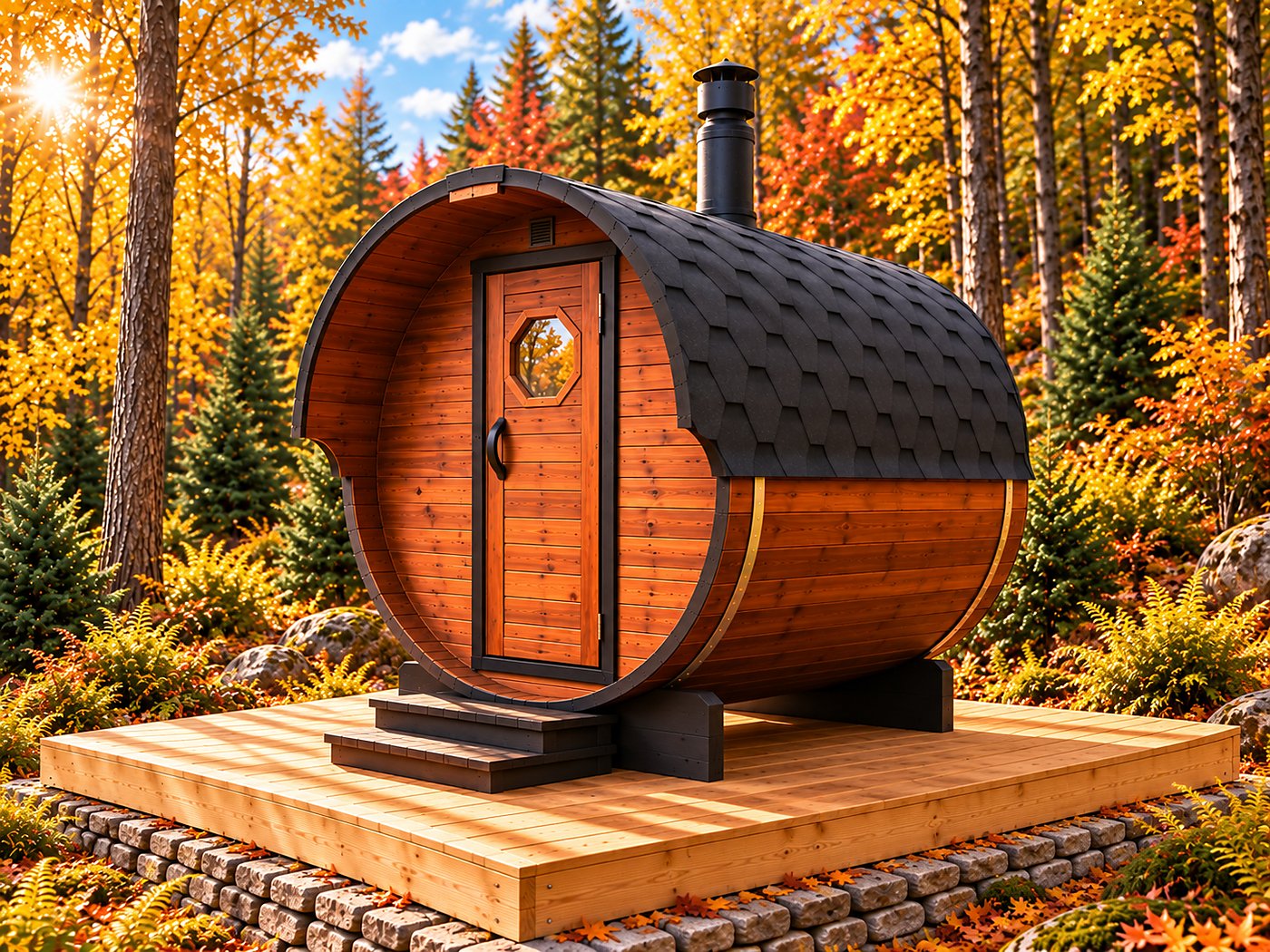
Barrel Sauna or Square Sauna: Which Suits Your Garden?
Barrel or square garden sauna? We compare heat-up, garden space, glazing, price per seat and durability outdoors, with a short summary of who suits which.
Read →A barrel sauna looks different from a classic cabin, and that is the first thing people notice. The reasons people choose one are practical rather than visual, though. Here are all the differences you will actually feel in daily use, including the ones where the barrel comes off worse.
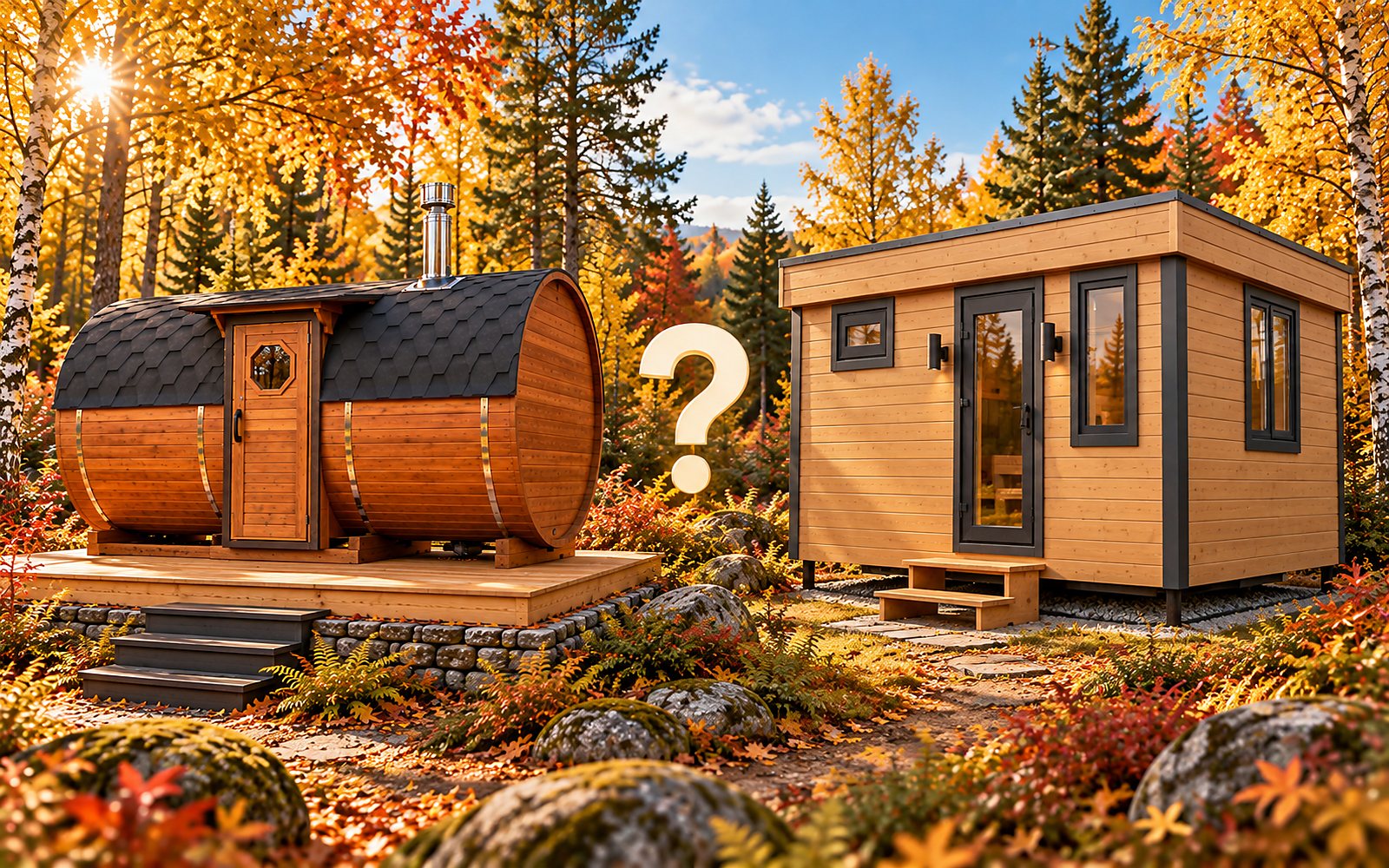
In a square cabin the heat collects under the ceiling, and the four corners stay as a zone the stove barely reaches. A round cross-section simply has no corners.
With the same length and the same number of seats, a barrel has roughly a fifth less volume. That follows directly from geometry: a circle covers less area than the square around it.
You notice it every time you use it: the sauna is up to temperature sooner and needs less wood or electricity for the heat-up.
Hot air rises above the stove, slides sideways along the curved ceiling and comes back down the walls towards the stove. The shape itself drives the loop.
That is why the difference between the top bench and the floor is smaller in a barrel. The classic “hot head, cold feet” effect largely disappears.
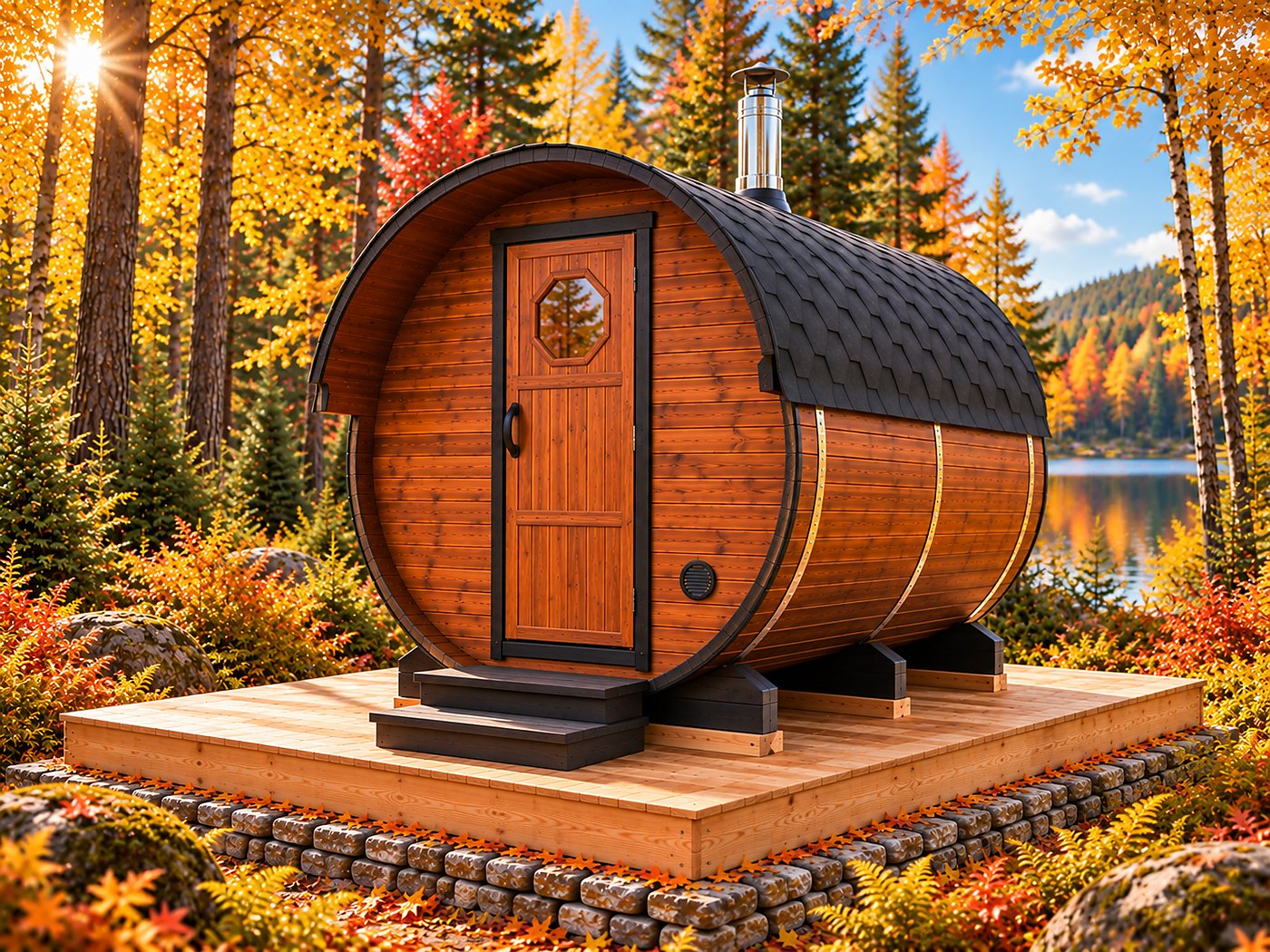
A round roof has no flat spots where water can sit and no ledges where leaves and pine needles pile up. Wet snow slides off at the first thaw.
This is one of the main reasons barrel saunas can stand outside all year round without a canopy or a tarpaulin, which matters in a climate where rain is as common as frost.
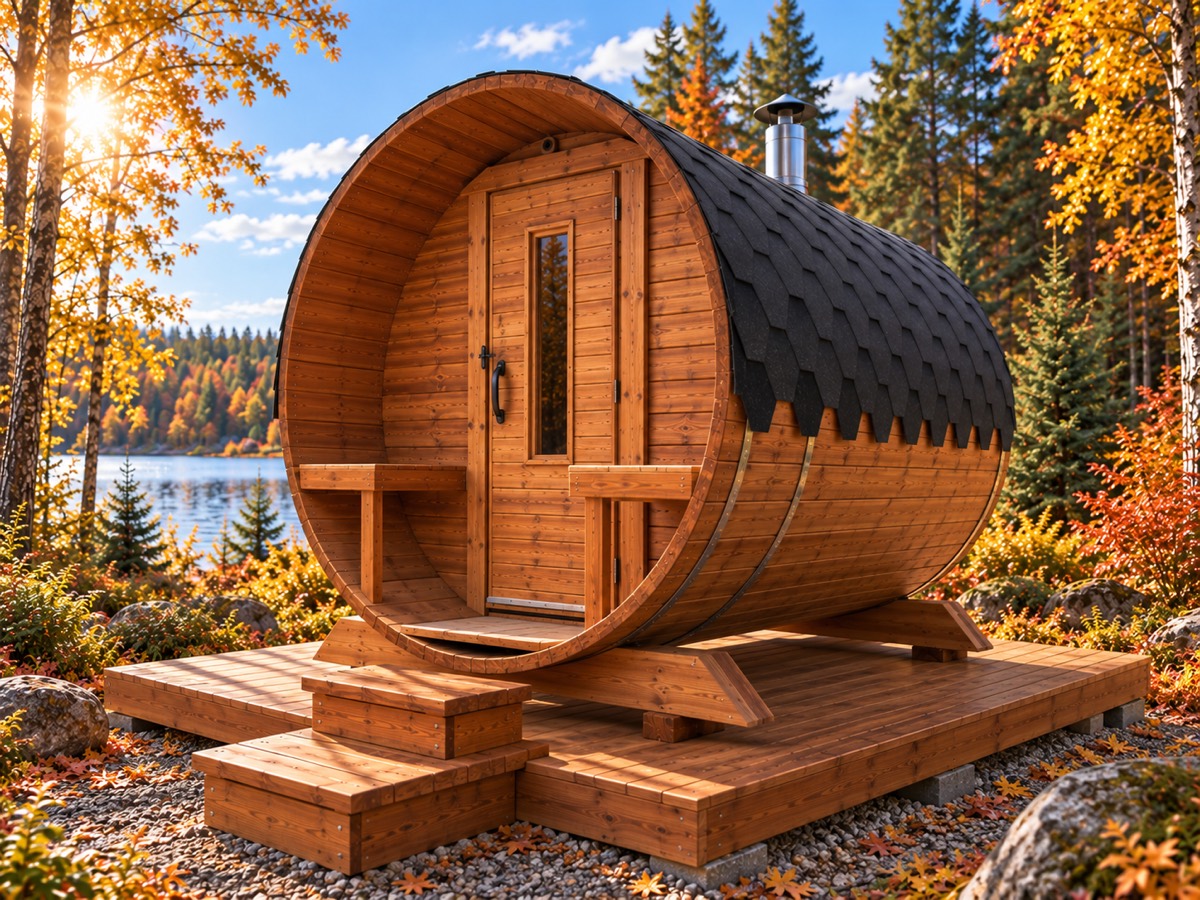
The weight is spread over several cross-supports along the whole length. A level, firm base is enough: paving, concrete slabs or compacted gravel with slabs on top. No concrete pouring, no waiting, no building crew.
The wall of a barrel sauna is structure, insulation and cladding in one: a single layer of solid wood, 44 mm thick.
A timber-frame cabin needs four layers to do the same job: studs, insulation, vapour barrier and cladding inside and out. That means more material, more labour and more places for things to go wrong.
It is also why our barrel saunas can be supplied as a self-assembly kit with a step-by-step manual, with every part prepared and fitted at the factory.
Large glazing is harder. A window has to follow the curve, so it is usually half-round or round in the back wall or the door. If you want a floor-to-ceiling glass front with a view of the lake, a square cabin gives you more freedom.
A barrel can hardly be extended later. You buy it in its final size.
It cannot be fitted flush against a house wall or a fence; there is always a little space left at the sides.
Barrel sauna: if fast heat-up, lower cost, a simple base and quick assembly matter to you, which is the case for most private garden saunas.
Square cabin: if a large glass front, fitting into existing buildings or a later extension are important.
Name and phone number — we will message you on WhatsApp, help you pick the size and price it with delivery to your address.
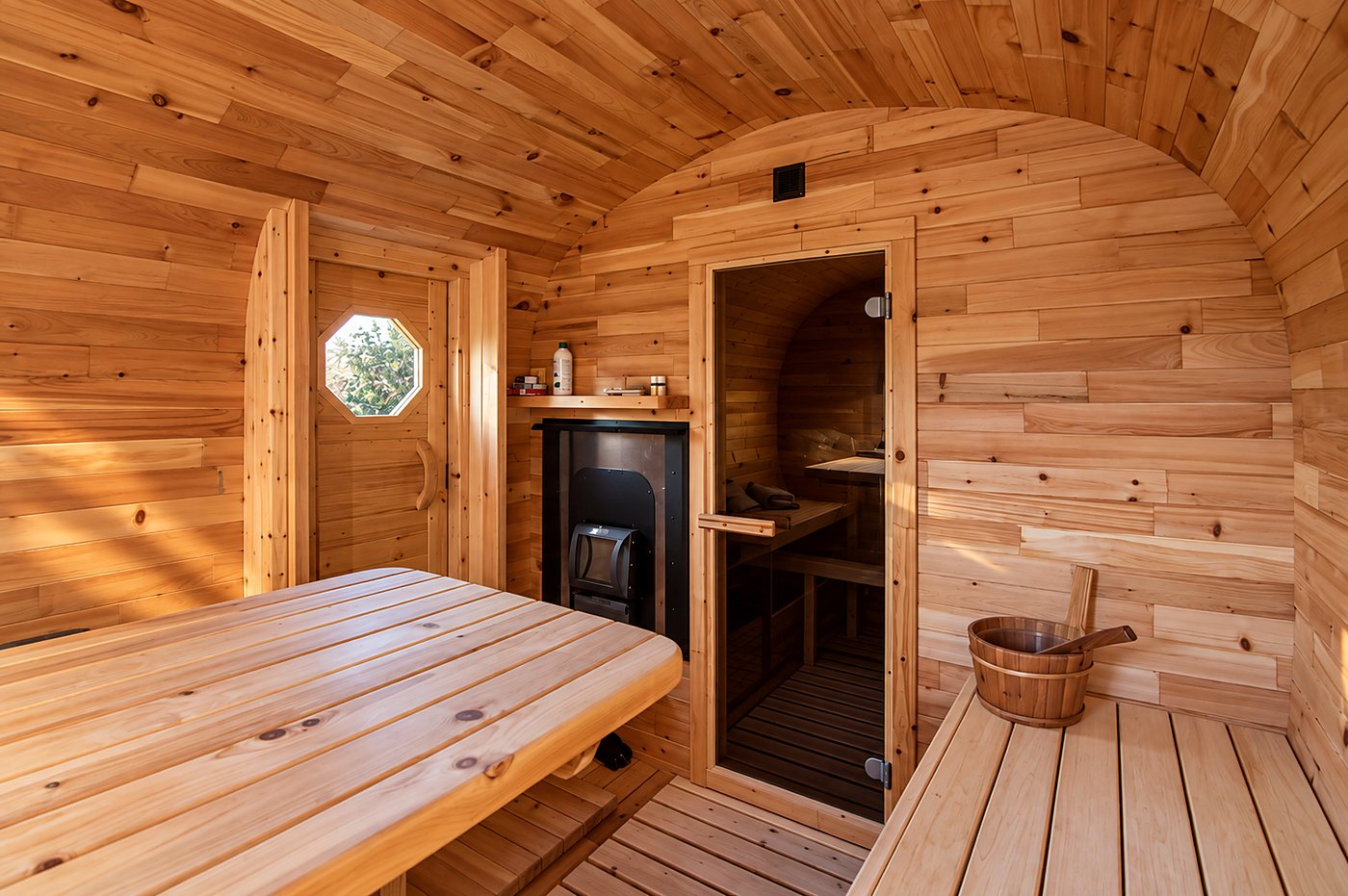
Barrel or square garden sauna? We compare heat-up, garden space, glazing, price per seat and durability outdoors, with a short summary of who suits which.
Read →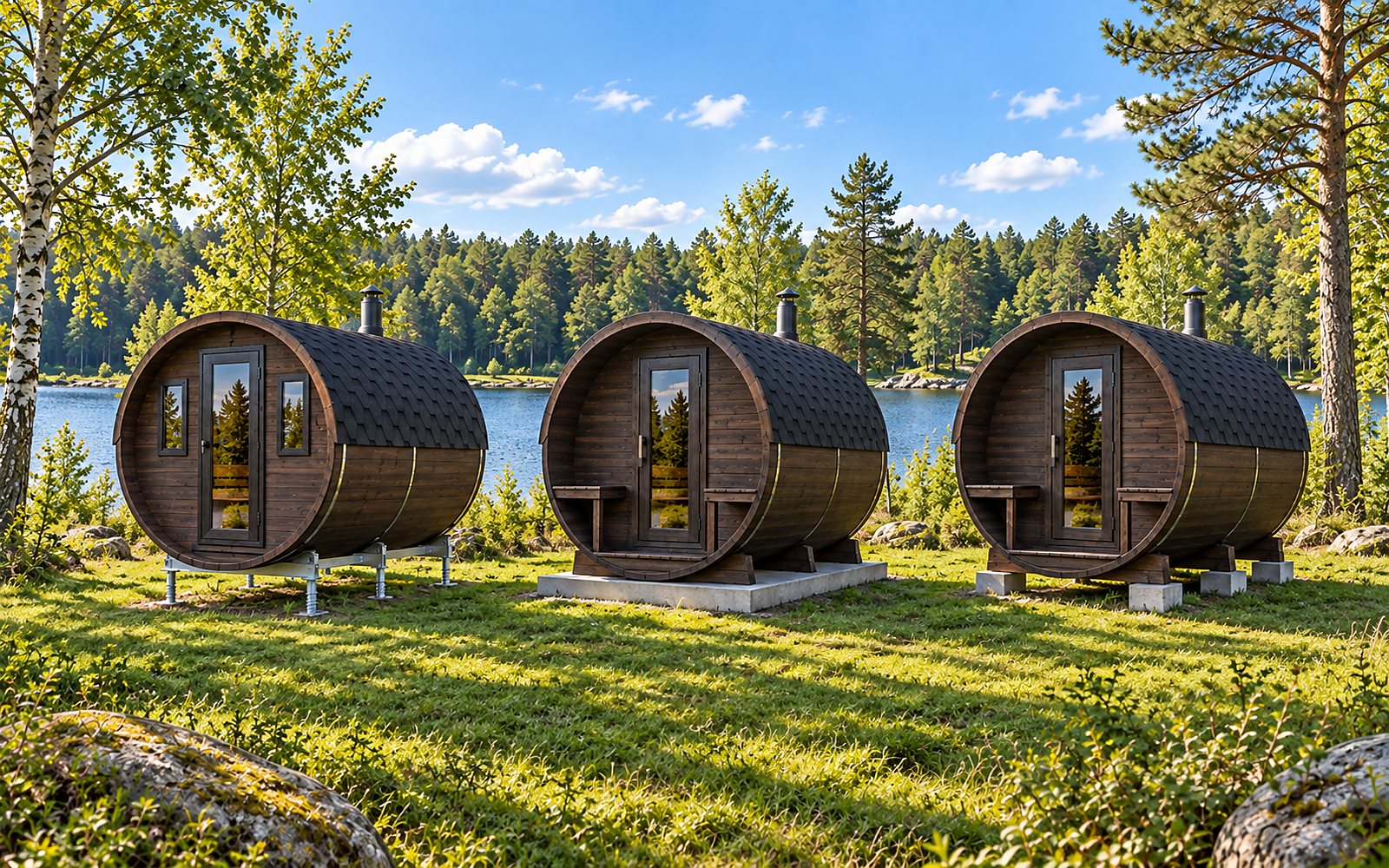
A barrel sauna needs a level, firm base rather than foundations. Paving, slabs or compacted gravel, how to level, how much space to leave, and what to avoid.
Read →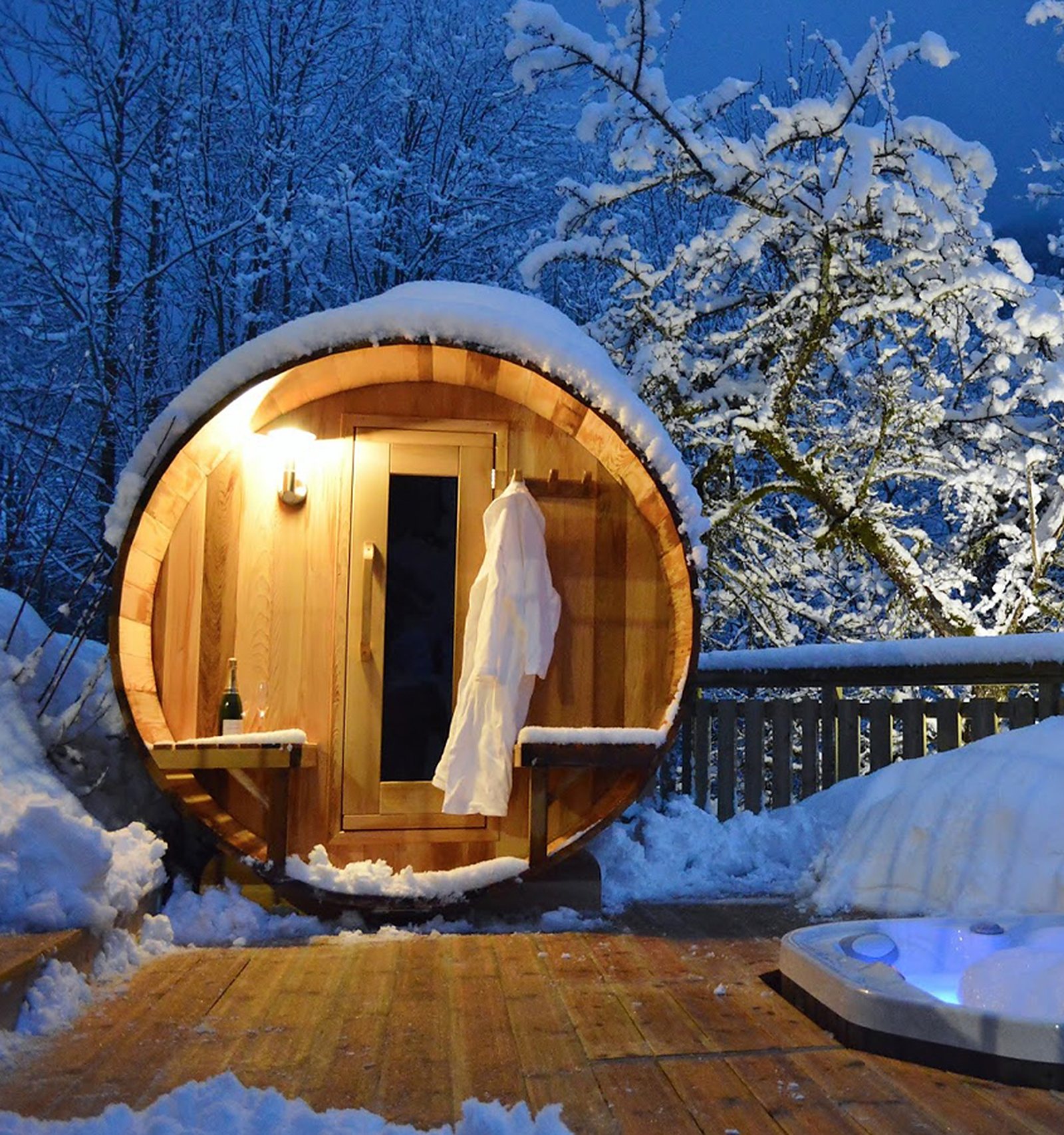
Heat-up time at freezing temperatures, why a barrel beats a cabin in winter, how to prepare the sauna and the path, and the maintenance habits that matter.
Read →Name and phone number — we will message you on WhatsApp, help you pick the size and price it with delivery to your address.
Cookies
Besides the essential ones, we use cookies for visit statistics and measuring ad performance. We turn them on only with your consent. Privacy.