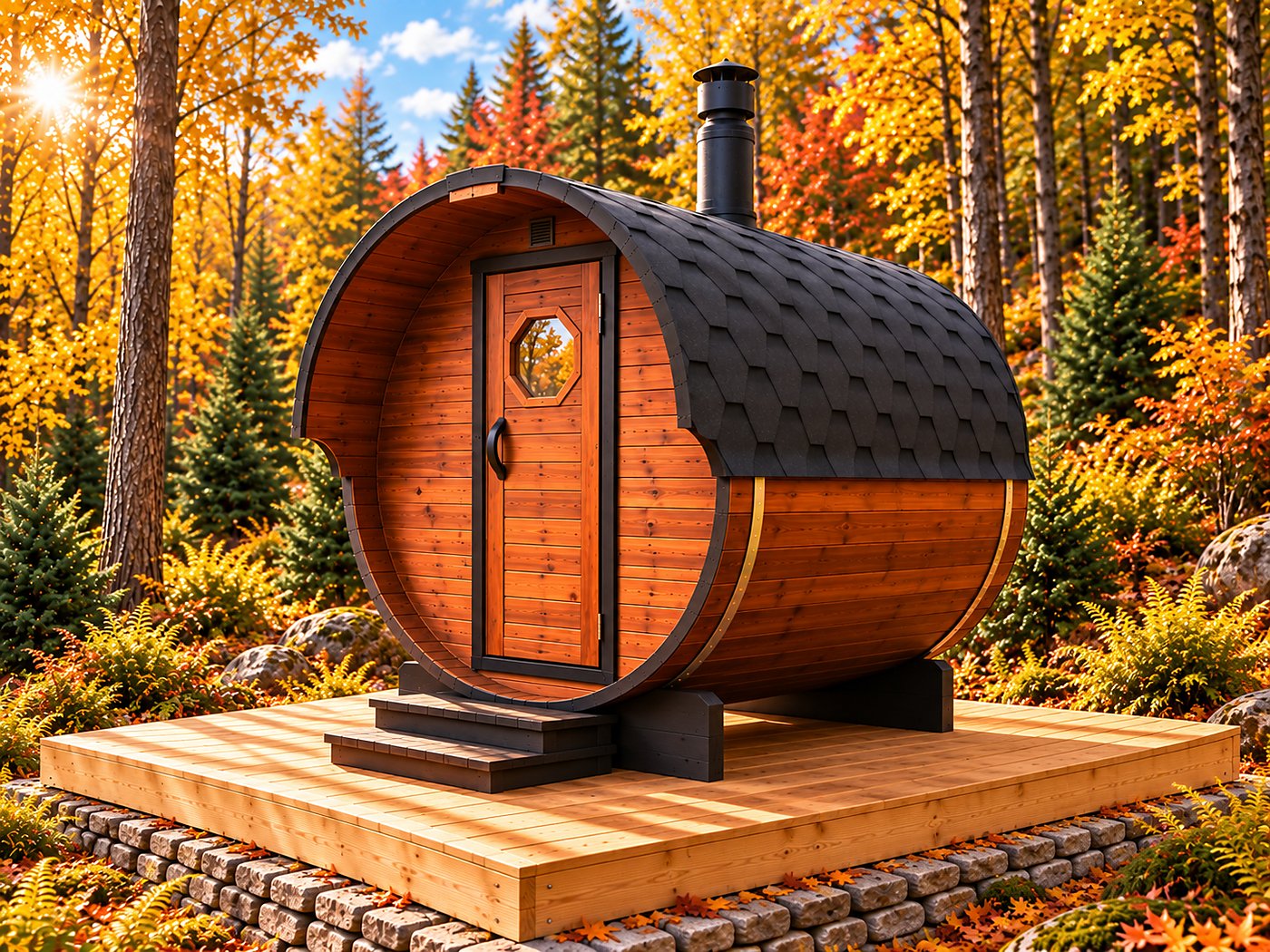
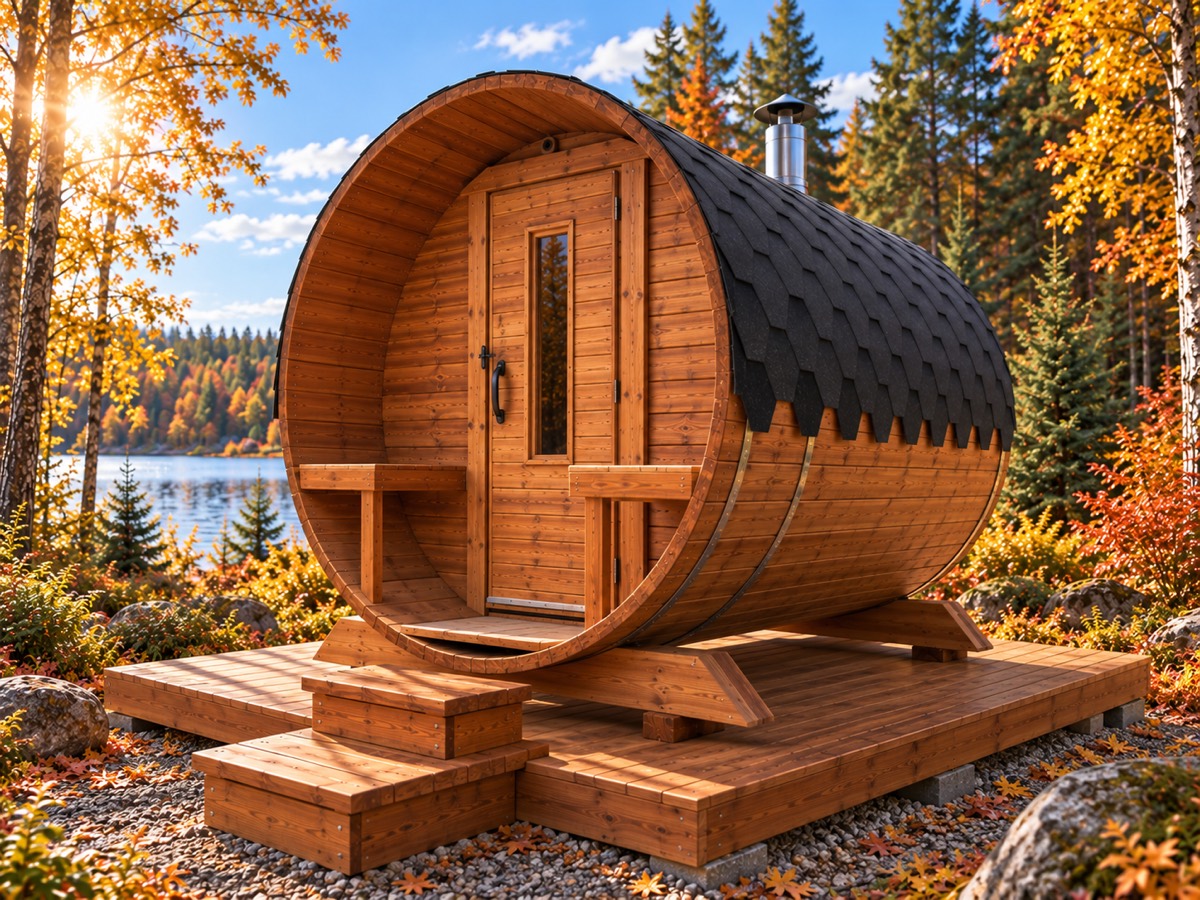
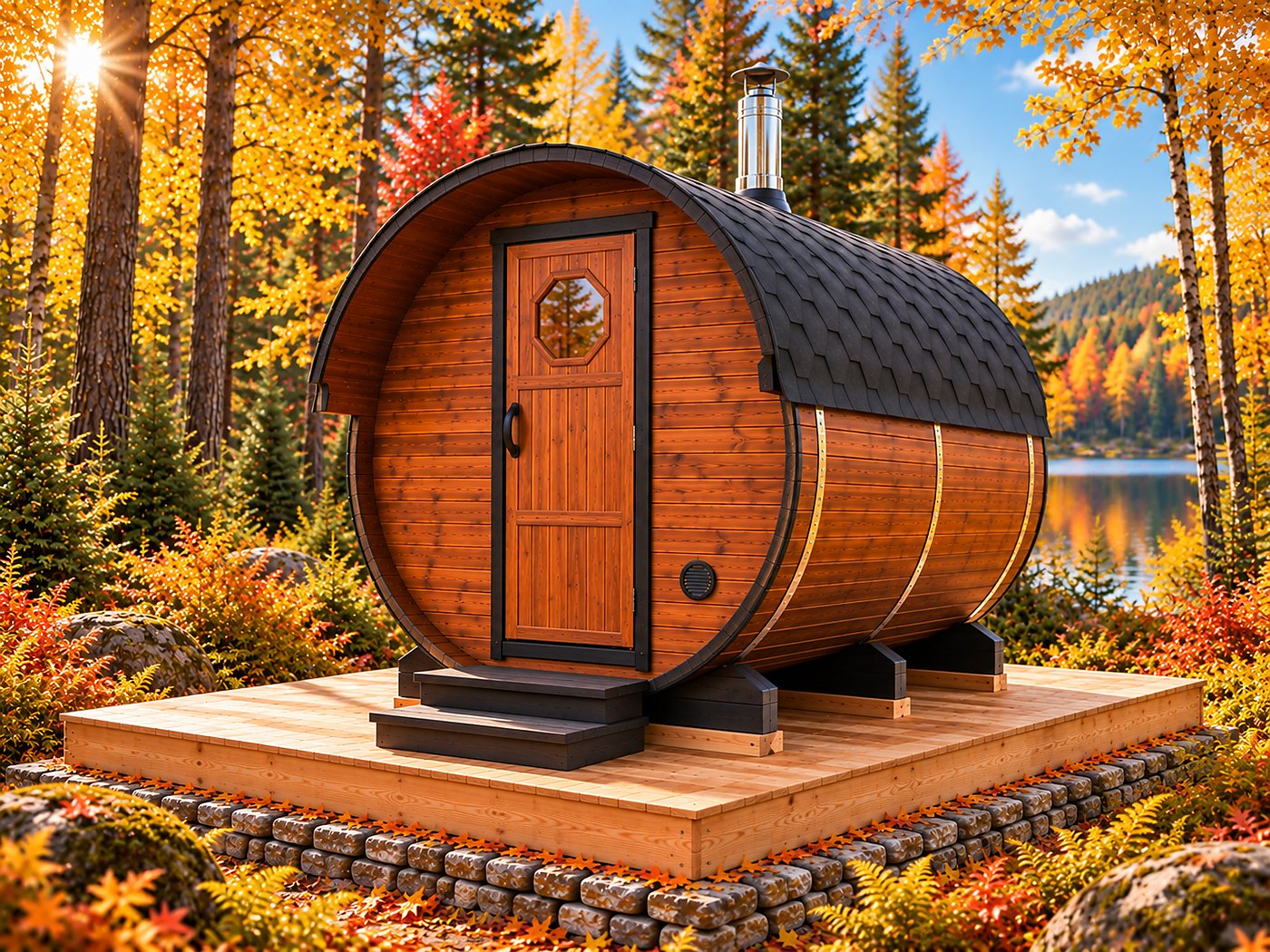
How Many kW Does a Barrel Sauna Stove Need?
A simple rule to size a sauna stove: roughly 1 kW per cubic metre, with a worked example, reserve for glazing and wind, and what to check if it stays cold.
Read →A lot of promises are attached to the sauna that nobody has tested, and they are repeated in sales brochures and guides. Here are the most common, together with what really happens. The real effects are good enough; there is no need to invent any.
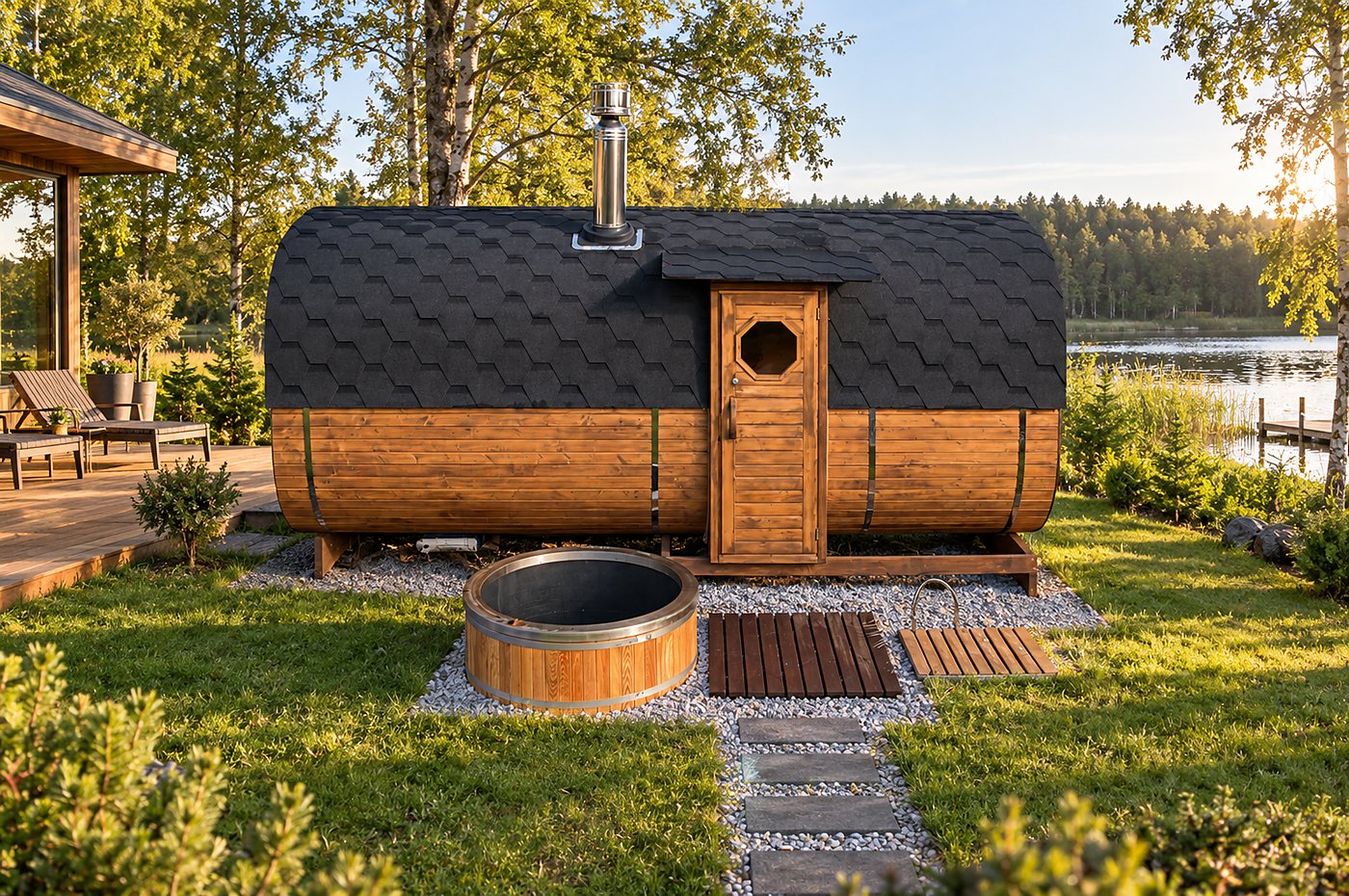
The liver and kidneys are responsible for breaking down harmful substances. Sweat is mostly water and mineral salts; the share of anything else is vanishingly small.
Feeling light and “cleansed” after the sauna is real, but the cause is loose muscles, better circulation and calm, not something being excreted through the skin.
Where the myth comes from: we instinctively link sweating with getting rid of something, and marketing has been happy to pick that up.
Regular sauna bathing may support your defences in the long run; that is a reasonable proposition.
But going in with a fever or an active infection is an extra burden on a body that is already deliberately raising its temperature and working flat out. Then you sit it out.
The difference is timing: sauna as prevention all year round, yes. Sauna as medicine during illness, no.
Above 100 °C there is no added benefit, only more risk of overheating and faster wear on the wood.
The classic Finnish sauna runs at 80–100 °C. A race for the highest temperature turns the ritual into an endurance contest, which is something quite different and much less pleasant.
You raise the felt intensity by throwing water on the stones, not with the thermostat.
After a session you can lose 0.5–1.5 kg. That is water, and it comes back in full with your first meal and first glass.
The sauna uses energy, but on the scale of a slow walk, not a workout.
Where it really helps: better sleep and less tension. Both make losing weight easier, but indirectly, not through sweating.
Quite the opposite. Short rounds of 8–15 minutes with full rests bring more than one long sit.
In the rest your pulse normalises and the relaxation arrives. Anyone who cuts the rests to spend more time in the heat spoils the effect.
With 44 mm walls and a properly chosen stove it works in sub-zero temperatures too; heating up simply takes 10–15 minutes longer.
Winter is in any case the season when it is used most.
The myth comes from experience with cheap constructions with thinner walls and a stove that is too weak. There, winter really is a problem.
Name and phone number — we will message you on WhatsApp, help you pick the size and price it with delivery to your address.
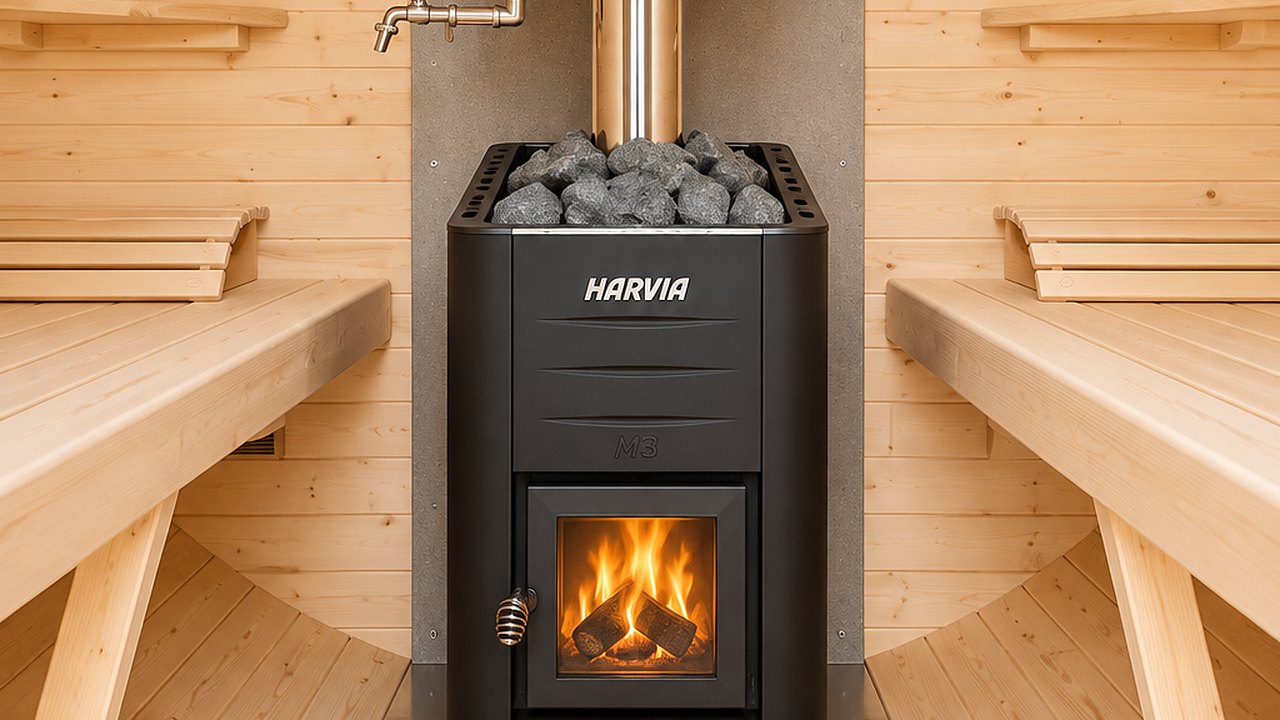
A simple rule to size a sauna stove: roughly 1 kW per cubic metre, with a worked example, reserve for glazing and wind, and what to check if it stays cold.
Read →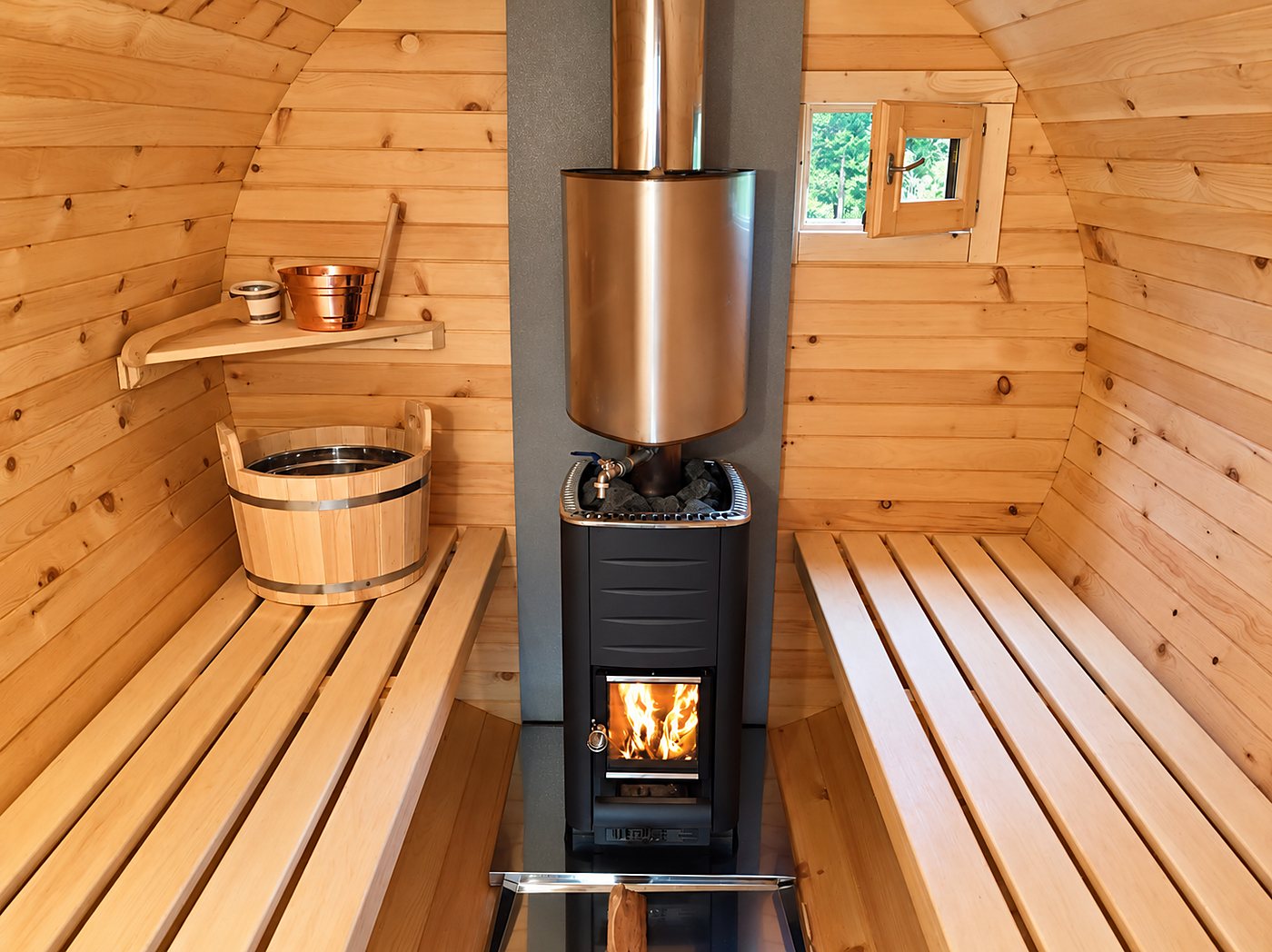
Why 44 mm is the standard for a barrel sauna, what thinner and thicker walls bring, when extra insulation is needed and how to check an offer.
Read →
What really drives the price of a garden sauna, which numbers in an offer to question and how to compare quotes properly, with kit and delivery explained.
Read →Name and phone number — we will message you on WhatsApp, help you pick the size and price it with delivery to your address.
Cookies
Besides the essential ones, we use cookies for visit statistics and measuring ad performance. We turn them on only with your consent. Privacy.