Barrel Sauna Chimney: Safety and Maintenance
How the flue of a wood-fired sauna is routed, what clearances to timber apply, what a spark guard is for and how often to clean the chimney.
Read →A sauna stove is lit differently from a fireplace. It is not about long, quiet burning, but about reaching a high temperature fast and holding it during the session. That changes how you stack the wood and how you run the stove.
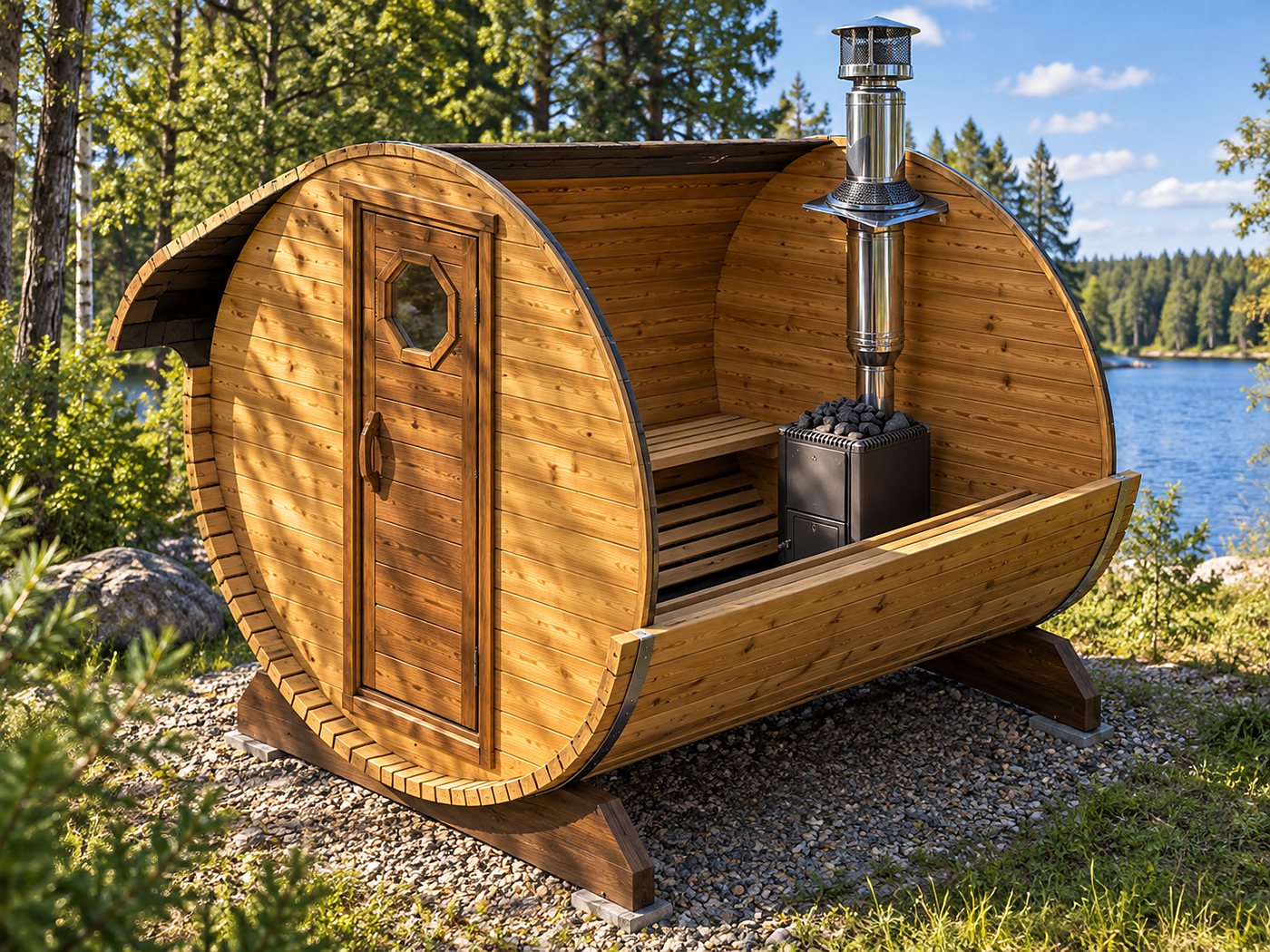
Remove the ashes from last time. A grate clogged with ash lets no air through, and it is the most common reason for a “smoking stove”.
Open the air intake and the flue damper fully. At the start you need maximum draught.
Have dry hardwood ready: ideally birch or beech, moisture content below 20%. Birch burns brightly and gives off a lot of heat quickly, exactly what a sauna needs.
Lighting from the top works best in a sauna: thicker logs at the bottom, thinner ones on top, kindling at the very top.
The fire works its way down slowly and evenly, and the gases from the lower layers pass through the flame and burn. The result is much less smoke than lighting from below, and less soot in the flue.
This matters for the neighbours too: the first quarter of an hour is when it smokes most, and this method cuts it noticeably.
Do not close down the air supply. The stove should come up to temperature quickly, not smoulder along economically.
This is the phase when it smokes most, so it pays to light up in good time before guests arrive, and when the neighbours are not sitting out on their patio.
Add two or three logs at a time, once the previous ones have turned to embers. Do not cram the firebox full to the top, as that chokes the air and the stove smokes instead of heating.
For lighting up and an hour of sauna in a 3 m sauna you need about 8–12 kg of wood, roughly a big armful.
Only when the stones are properly hot, that is, after the sauna has fully heated up. Water on cold stones gives damp air and cools you down instead of making steam.
One ladle at a time, not a bucket. And tell the others first, because the felt temperature jumps suddenly, and for some people too much.
Damp wood: the sauna does not heat properly and the flue soots up many times faster.
Closing the air down too early “so it doesn't burn so fast”.
Burning chipboard, furniture offcuts or painted wood. It ruins the stove, clogs the flue and is not allowed.
Leaving the stove unattended with the firebox door open.
Wood-fired stoves are a matter of installation as well as technique. Have the flue fitted by a competent installer and keep a fire extinguisher or fire blanket nearby.
Name and phone number — we will message you on WhatsApp, help you pick the size and price it with delivery to your address.
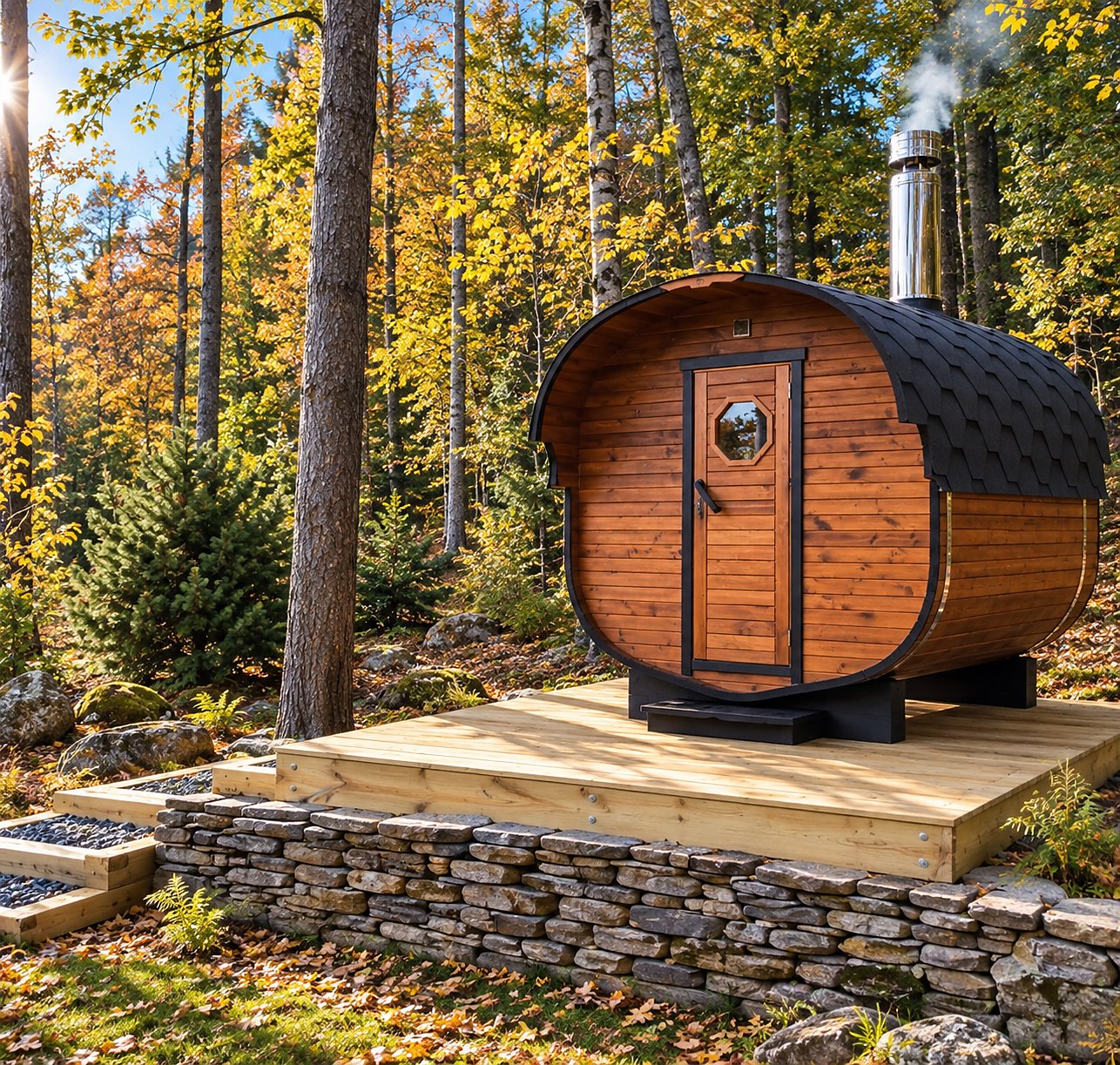
How the flue of a wood-fired sauna is routed, what clearances to timber apply, what a spark guard is for and how often to clean the chimney.
Read →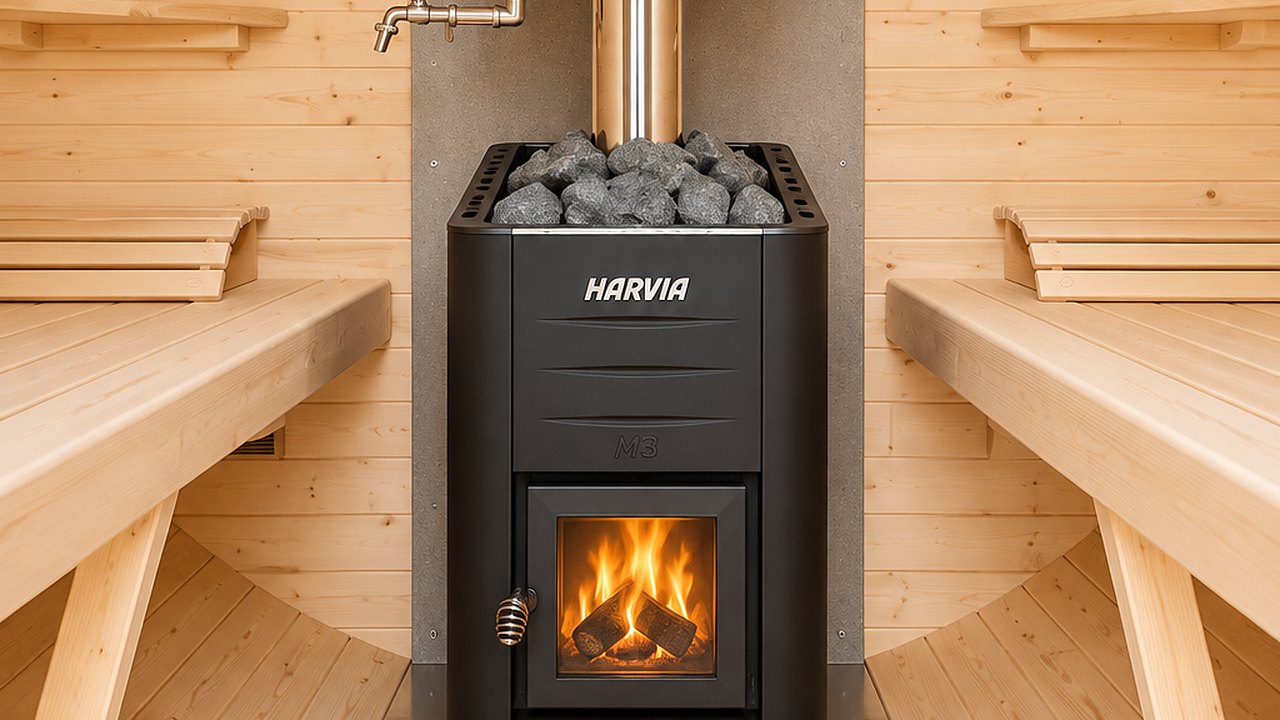
Why your barrel sauna won't reach temperature: door seal, ventilation, damp wood, packed stones, stove size. Check them in order, cheapest first.
Read →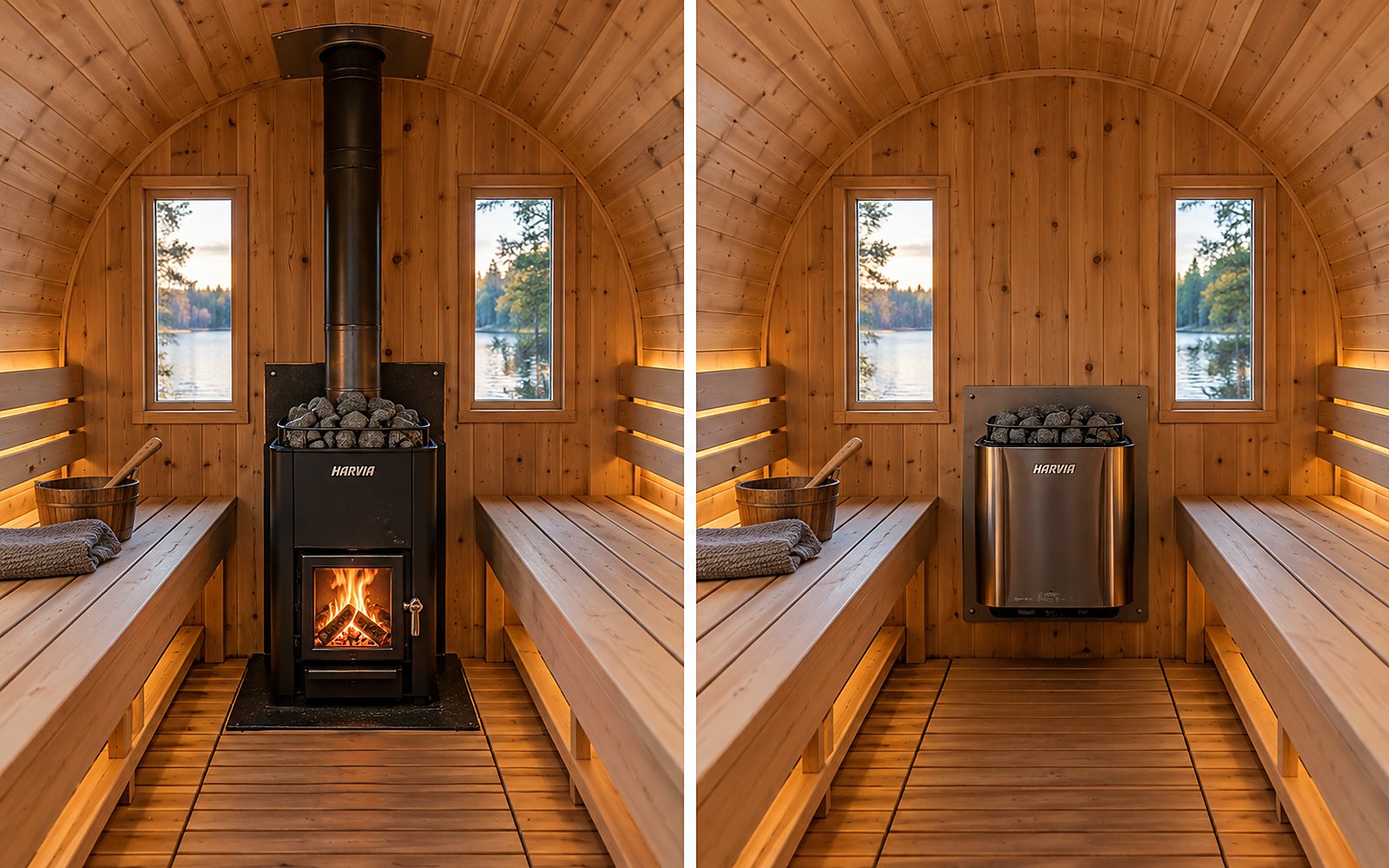
Wood-burning or electric stove for your garden sauna? Heat character, running costs, power supply, safety and which to choose for home, holiday home or let.
Read →Name and phone number — we will message you on WhatsApp, help you pick the size and price it with delivery to your address.
Cookies
Besides the essential ones, we use cookies for visit statistics and measuring ad performance. We turn them on only with your consent. Privacy.