Glass or wooden sauna door: which is better?
Glass or wooden door for a garden sauna: heat loss, safety and durability, plus the one part that wears out first on every sauna door, the seal.
Read →Wood has two completely different jobs in a sauna. Outside it fights rain, sun and frost. Inside it touches your skin at 90 °C. That is why it is almost never the same wood, and it pays to know what belongs where.
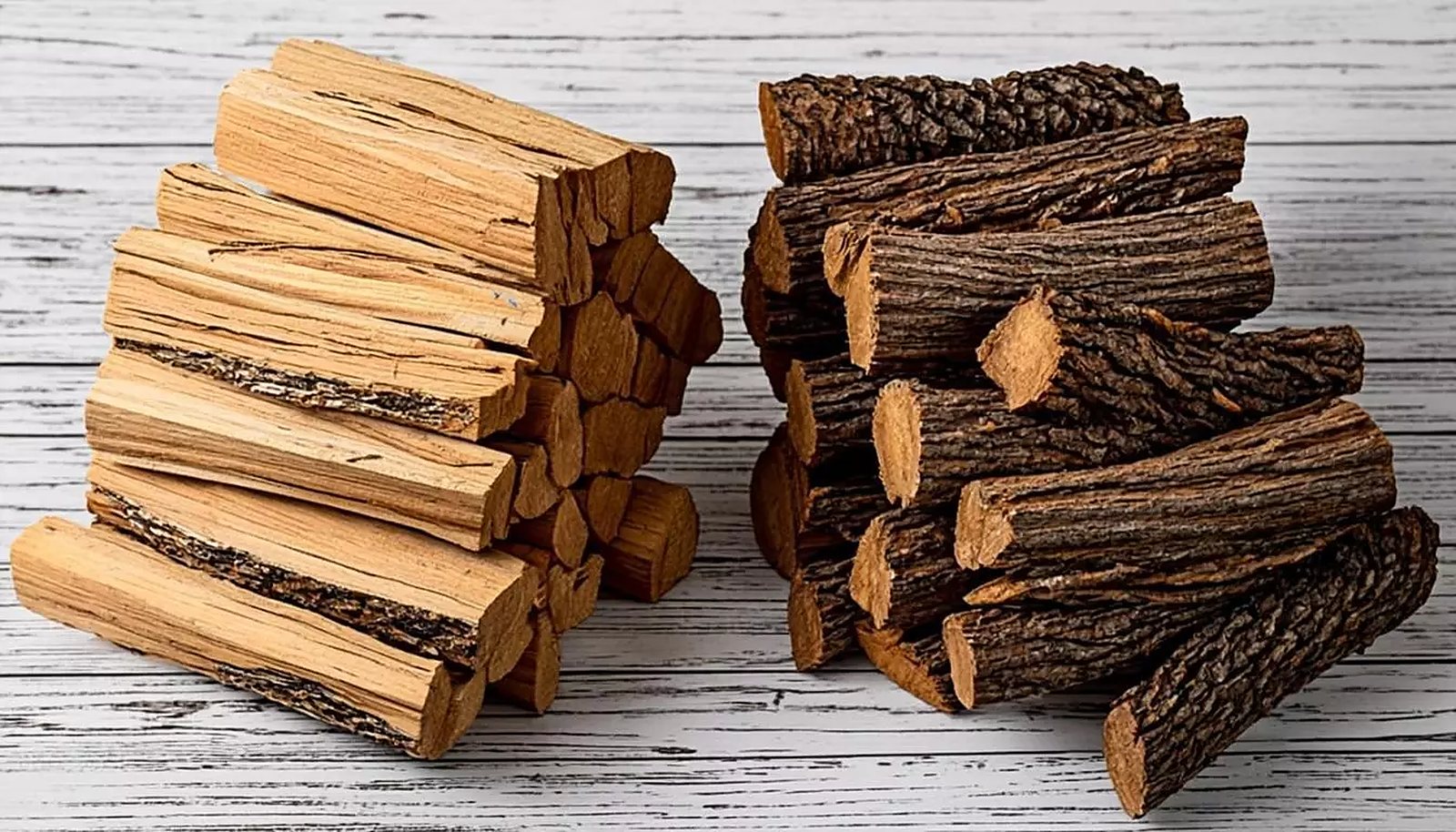
The most widely used material for the shell, and rightly so: dimensionally stable, light, pleasant in tone and reasonably priced. Our kits use solid Nordic spruce, 44 mm thick.
44 mm is a sensible minimum for year-round use. At this thickness the solid wood itself acts as insulation, so no extra layer is needed.
Thinner walls heat up faster but also lose the heat just as fast. In summer you barely notice, in cold weather you notice very much.
Spruce turns grey in the sun over time. That is natural and does not reduce its strength; if you want to keep the colour, treat the outside with a wood stain every year.
All our saunas are built from 44 mm solid Nordic spruce, and we do not offer any other timber for the walls. At this thickness spruce is stable, holds heat well and, with regular outside treatment, lasts for many years.
For benches, backrests and headrests. One property decides: these woods conduct heat poorly and therefore do not burn your skin even at 90 °C.
Aspen also has very few knots and a light, even colour. Alder is slightly darker and just as safe.
Spruce on the bench is acceptable but gets noticeably hotter, especially at knots, which hold more heat than the rest of the board. If it is spruce, make it knot-free and sanded smooth.
Heavily resinous softwood for benches and backrests: the resin comes out in the heat and sticks.
Wood-based boards, plywood and MDF in the hot zone: the glues are not designed for these temperatures.
Varnish inside. It cracks and gives off fumes. Inside, use at most a special sauna oil on the benches.
Fresh, undried timber: it moves and cracks far more in the first seasons.
Ask separately about the wood species and thickness of the wall, about the wood of the benches, and about whether the timber is kiln-dried.
The answer “softwood” without details usually means spruce or pine everywhere, benches included. Then ask exactly what the benches are made of and whether they are knot-free.
Name and phone number — we will message you on WhatsApp, help you pick the size and price it with delivery to your address.
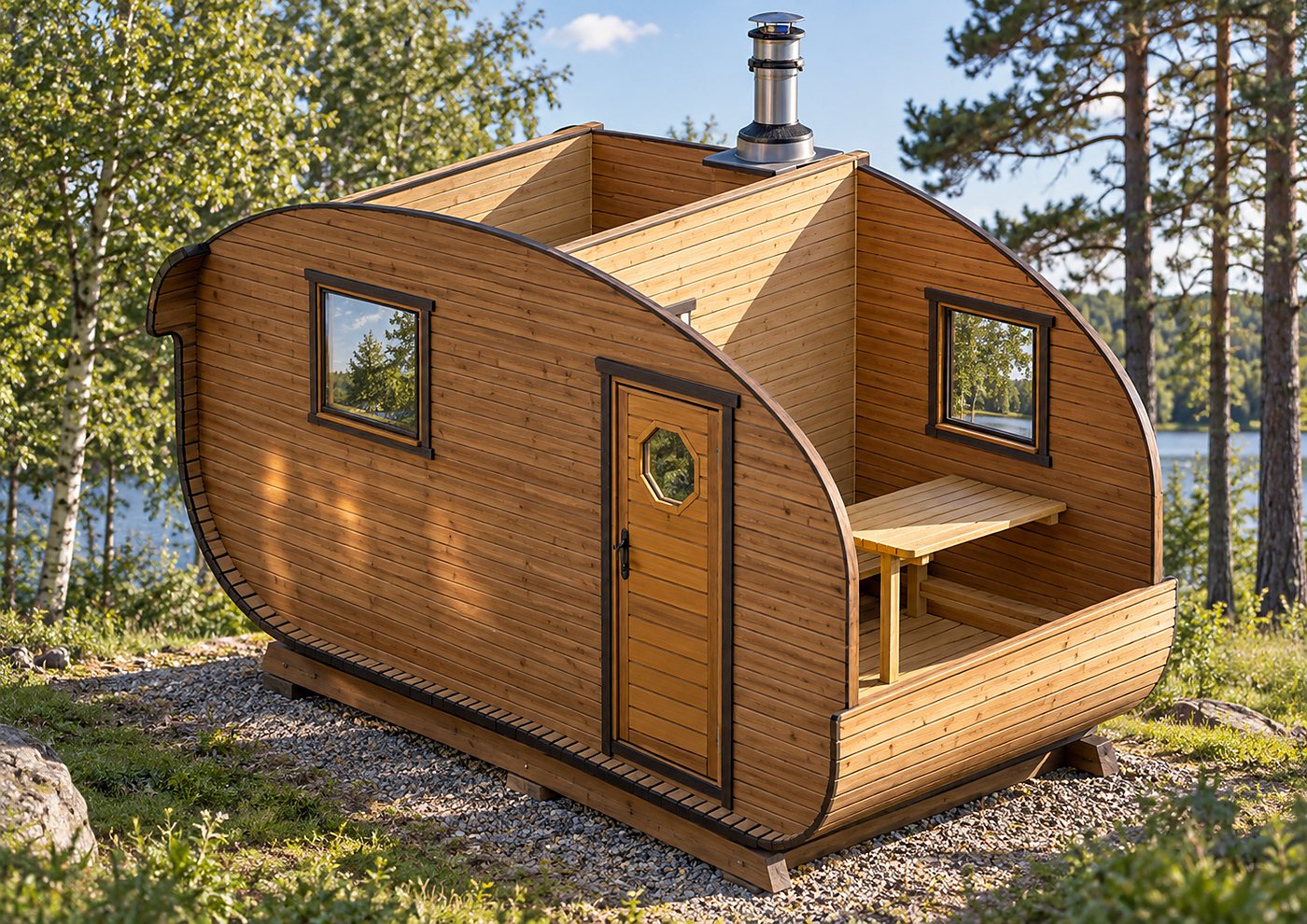
Glass or wooden door for a garden sauna: heat loss, safety and durability, plus the one part that wears out first on every sauna door, the seal.
Read →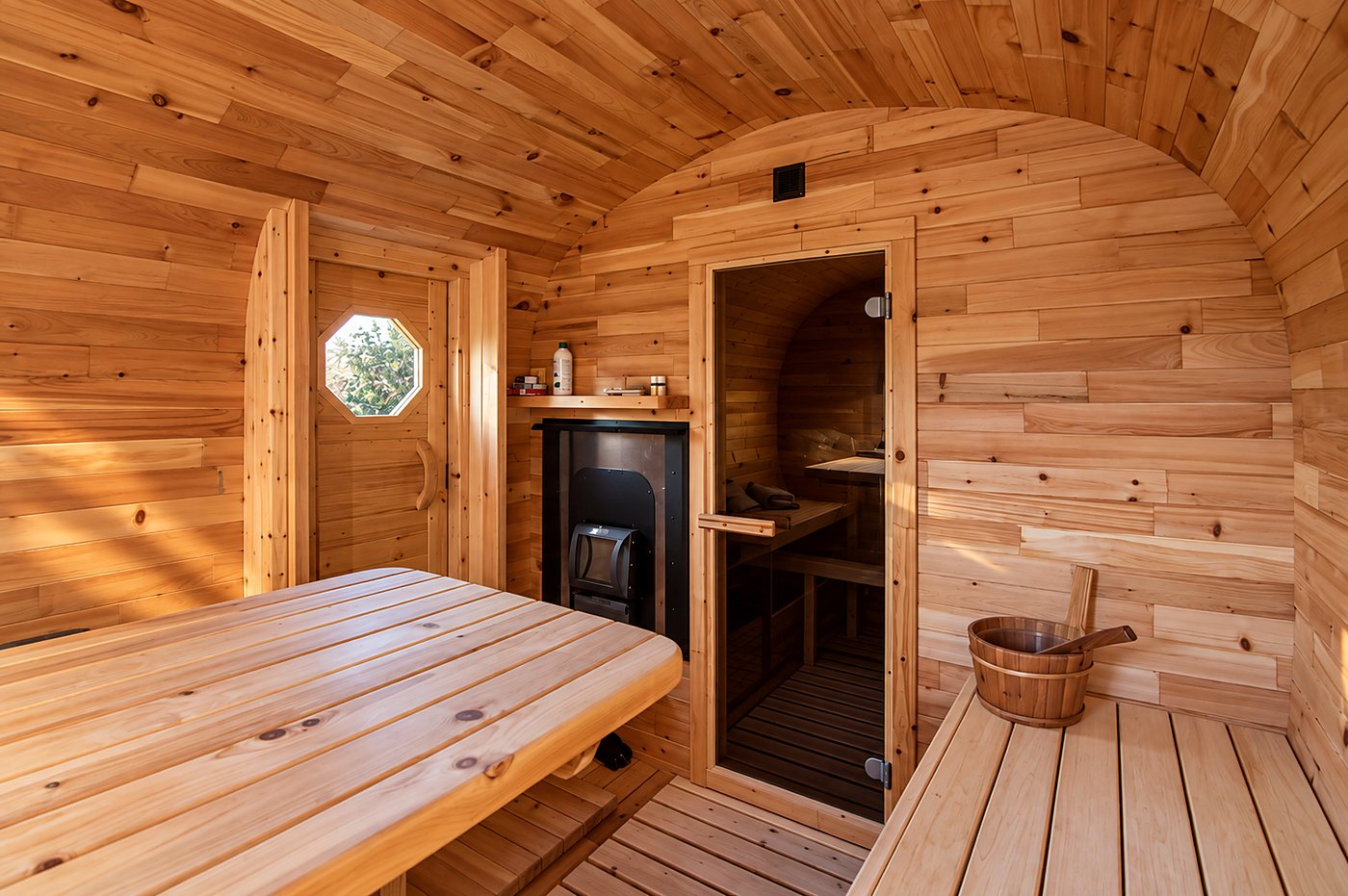
Barrel or square garden sauna? We compare heat-up, garden space, glazing, price per seat and durability outdoors, with a short summary of who suits which.
Read →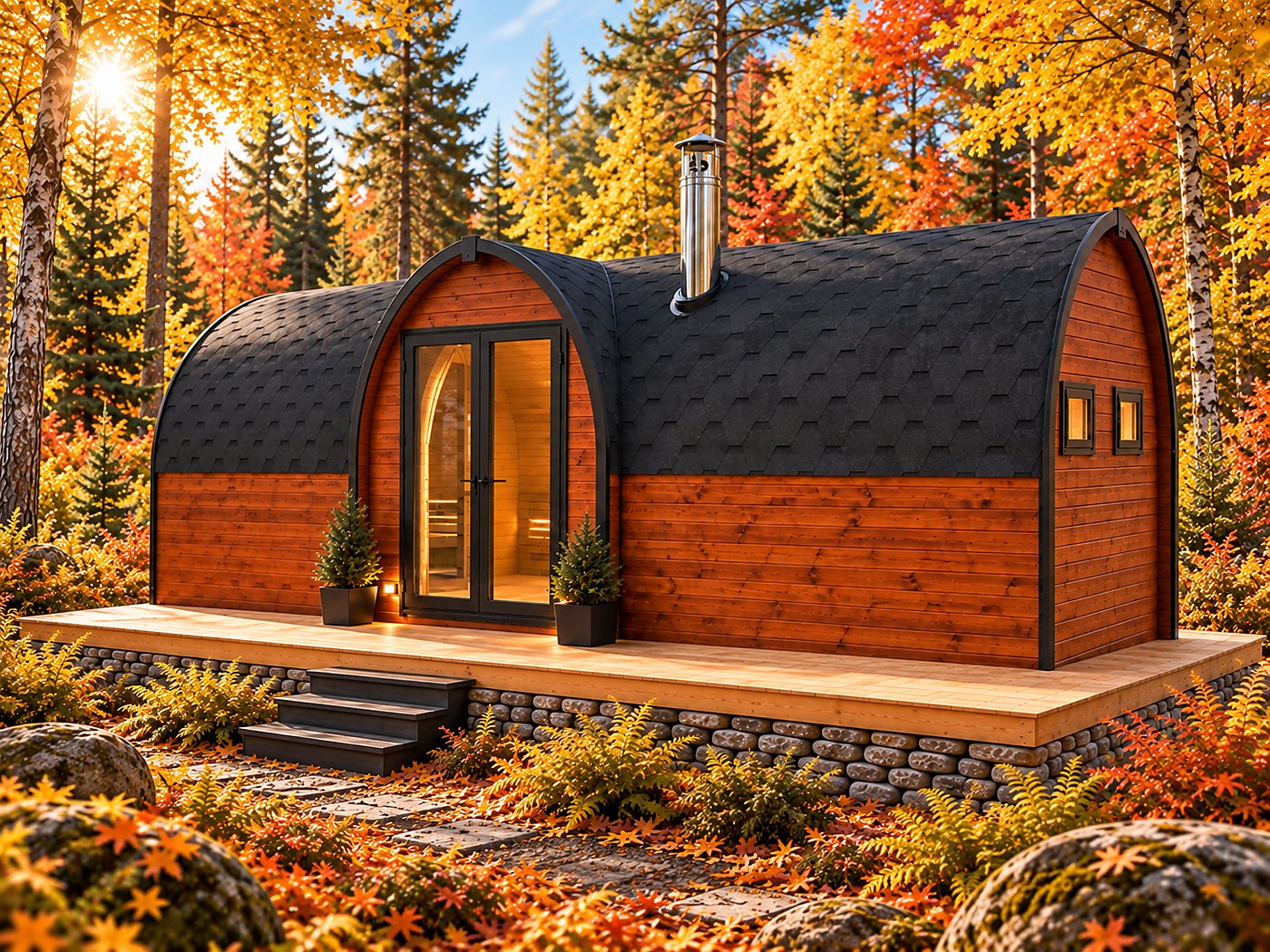
A simple care routine for a barrel sauna: after every use, once a season and yearly wood treatment, plus what never to do, such as pressure washing or varnish.
Read →Name and phone number — we will message you on WhatsApp, help you pick the size and price it with delivery to your address.
Cookies
Besides the essential ones, we use cookies for visit statistics and measuring ad performance. We turn them on only with your consent. Privacy.